
Photography by Douglas Barkey · Nassau, The Bahamas
Junkanoo Colours
Inside the Shack
Scroll
Photography by Douglas Barkey · Nassau, The Bahamas
Inside the Shack
About the Work
The Junkanoo Festival has been documented in The Bahamas for over two hundred years. It is a riveting spectacle of Bahamian magnificence, breathtaking in its colour, movement and rhythms that are showcased each year in two glorious parades at Christmas and New Year's.
Yet in spite of Junkanoo being so integral to our lives, few have gone beyond the glory of the parades, and delved into the back-story. This is what Dr. Barkey has done. With an 'outside' eye, he has documented what many of us take for granted — the preparation of a Junkanoo group for the Junkanoo parades. In tracing the journey of Colours Junkanoo group to get to the parades, Dr. Barkey has gone into the Shacks, witnessed the practices and documented the months of intense labour that result in the magic manifested on Bay each year.
This is a journey, the intricacies of which many people are unaware. This book gives an up-close and personal view of the drama of Junkanoo that goes on behind the scenes. This is the story, told in photographs that capture us, that make us a part of the experience.
I thank Dr. Barkey for telling such an important part of our story. Because of this work, future generations will be able to travel with Colours on their Junkanoo journey in our era.
— Arlene Nash Ferguson, Director, Educulture Bahamas Ltd

noun — a centuries-old street parade featuring masqueraders, dancers, and musicians, with origins in enslaved communities in the Caribbean; a communal space of the Diaspora where ancestral voices are proclaimed.
Most historians place the first Junkanoo celebration in the 18th century following the defeat of Akan forces at Fort Fredericksburg, a German construction on Ghana's Gold Coast. The army's chief, whose Akan name is unknown, is identified in European historical accounts through variations of "John Canoe." By the mid-century, enslaved Akan people displaced to the Caribbean celebrated the legacy of John Canoe through an annual masquerade festival held in late December. The first parades included re-enactments of Akan's rich culture and history, with dances and costumes inspired by Akan battles, swordsmen, and commanders.
Throughout chattel slavery, annual Junkanoo celebrations allowed enslaved individuals to embrace performance to express various emotions, from pain to hope and joy. The first costumes consisted of simple masks and layered clothing. Unlike the extensive imagery presented in this catalogue, early Junkanoo was rarely documented through paintings, drawings, and photographs. Despite a lack of pictorial documentation, Junkanoo's mere emergence across physical and geographical borders in enslaved communities of the Caribbean and Southern United States underscores its inherent power. Junkanoo is, within its own origin story, equally a testament of perseverance and a homage to our shared heritage. The resilient spirit of the first Junkanoo-ers has resulted in an intricate web of connections between our community and our regional neighbours.
Nearly three centuries later, the investment and preparation for the now bi-annual parades extends beyond the one-night performance. Still, it is a communal act that requires engagement from all levels. It often takes over half a year of planning to produce a seamless storyline through costume design, choreography, and the performance's accompanying music. Every holiday season, the sound of drums, cowbells, and whistles fills the air, creating an irresistible rhythm and pulse that fills the street. For Nassauvians, this magical moment often occurs on Bay or Shirley Streets, the main corridors of downtown. In a space where locals typically travel strictly for work, a spirit of togetherness emerges. Behind the grandeur presentations, our gathering is a symbolic honouring of our ancestral roots as we experience a continued cultural exchange between our nation, the Caribbean region, and the Black American community. Musical scores often include adaptations from pop songs, and choreographies blend traditional Bahamian dance with popularised dances of neighbouring cultures. Like the historical era, modern Junkanoo is also a platform for social and political commentary, with groups often incorporating global events and motifs in their themes.

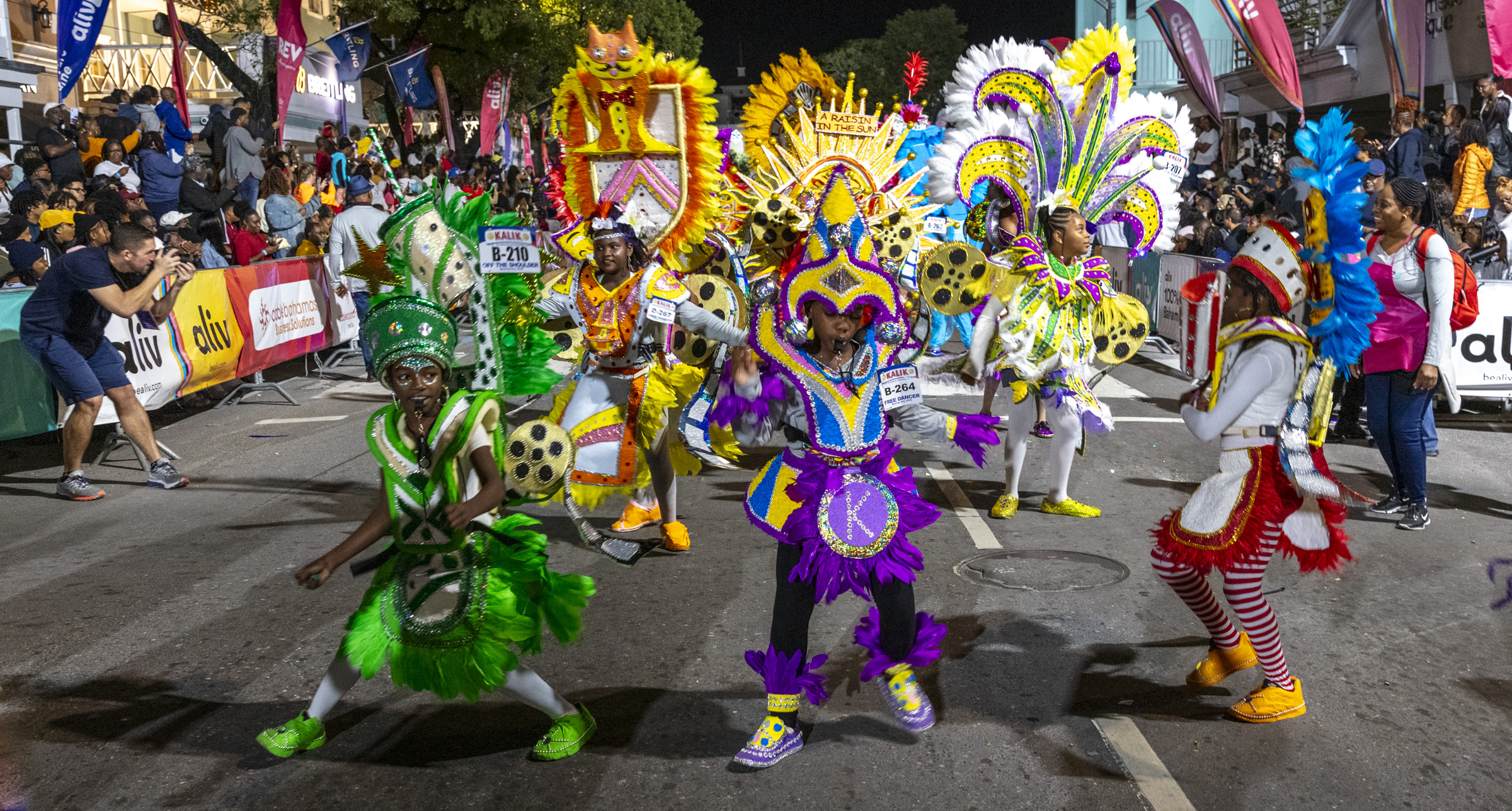
Yet, perhaps the greatest testament to Junkanoo's enduring power lies in its contemporary existence, particularly in our pictorial history. There was once a time when Junkanoo was too Black — too African — to be embraced on a national level, let alone be at the forefront of our nation's international branding. Even throughout the early- to mid-20th century, commercial photography omits Junkanoo performances almost exclusively. In my own curious dives into public archives, both in The Bahamas and abroad, I rarely find images of Junkanoo before the 1960s. Whether an intentional effort or a subconscious one, any attempts to distance Junkanoo from our national identity have failed since 1973. No longer is Junkanoo restricted to enslaved communities, with limited resources and reach. Rather, images and oral accounts of Bahamian Junkanoo are now widespread, with annual performances occurring across the globe in South Florida, Georgia, England and beyond.
Now, through this exhibition and catalogue, we begin to memorialise the beauty of Junkanoo's process, in ways we may not have even realised were previously erased or ignored. As historian Darren Newbury writes, "photographers do not merely record, but rather construct an image of society." From the shack, to the rehearsals, to the rush out, the photographs collated here proclaim the historic, the present, and the future. While 21st-century parades may not mimic the structure of the historic celebrations, Junkanoo is an evergreen symbol of resistance and unity, one that continues to transcend time and space.


The Junkanoo parades are a puzzle that must be solved every season. For many, it just means getting out and lining up — asking yourself, how will I get in the gate? For competitive groups, it is a long and complicated process.
If you are a purist, getting to the gate and making that first lap is an accomplishment, if not a simple victory in itself. But when you and the hundreds of members around you are lining up for the big prize, cracking the code is paramount.
But is it really a code? Is there a magic formula that guarantees victory in the morning? Can you tick every box each morning and be assured a title? Maybe, maybe not. Themes, costumes, dance, music and organization do not win Junkanoo parades.
The Spirit of Junkanoo that moves through Bay and Shirley has to favour you. Everyone has some connection to it when they line up, but the Spirit has to choose you, too. And you have to accept the power of it, and let yourself go.
The Spirit makes your costume lighter and brighter. It gives you the energy that you do not have and makes you forget the pains that you do have. It makes your backline louder and your horns clearer. It makes the crowd who hate you…fall in love.
The Spirit has an energy that flows through each member and is carried by sound into the crowd connecting them for a few minutes of life where all is well. There are no bills, no problems, no loss, no anxiety, and no fear. Bay is a pathway that allows us to connect to the Ancestors who endured more than we can imagine. The Spirit connects us to their strength and refills our souls to face another year if, by the Grace of God, we are spared.


When that Spirit is with you in the morning, your joy cannot be contained, and it will electrify all who come into contact with it.
Once you experience the energy of the Junkanoo Spirit, things become clearer like why you won or why you don't care that you didn't.
Many Junkanoos when asked about their best or favourite rush don't always describe a winning morning. Instead they describe a connection to the Spirit, feeling free or a sense of relief, or that morning when the rush was just sweet — when your costume was right, fit right, danced right and didn't break you up — when all the songs you heard at practice sounded perfect from wherever you lined up. When the fans just appreciated you, and you saw all your friends cheering for you.
The Spirit makes you glad for that third lap, when you can't find any more water in the rest stop because your group was last off of Shirley, and ya'll carry on so bad that there aren't any more leaves on the trees, and when you hoping people still left downtown… But the Spirit is with you because there is a whole new audience waiting to see you come down, and they hype because they didn't pay and know they are about to get a solid show.
In that moment, all you want to do is give the Spirit back and share it with everyone because everyone should feel this good.
In our time, life can be hard, but for a Junkanoo, going down the boulevard makes life worth it. Long hours in the Shack in the heat or cold, sweating, bleeding and working is our sacrifice to Spirit for the blessing of another parade.
The Spirit does not recognize a banner or symbol. It does not acknowledge affiliation of any kind. It seeks only to connect with those aligned with it — those ready to feel its strength from the beating drum, ringing bell and blaring horn; those ready to be carried away in movement through rhythm; those ready to celebrate love and togetherness through community and purpose.
The Junkanoo Spirit is sweet. Whether you are on the road or alongside it, to taste the Spirit is joy.
— Eric Hall
It's quite possible that Colours is the most influential B group in today's Junkanoo. I say that with every expectation of meeting heated contradiction, and that's OK; it's Junkanoo after all, and what is Junkanoo if someone isn't getting rob? But I say it nevertheless. Why?
Well, because although the B group category was created in 1988 to facilitate the creation of newer, smaller Junkanoo and encourage their growth, Colours never subscribed to the idea that smaller meant lesser. While many expected the B group category to be used as gateway to the "Big Time" (aka the A groups), the Justilien brothers saw an opportunity to create a different kind of Junkanoo experience. The limitations on the size of the group meant that they could strive for excellence in ways that larger A groups might find difficult. They could audition musicians and dancers, and they could rehearse them all year round. This creation of a professional-style core meant that they could develop an economic model that would make them flexible and solvent, rather than having to depend on sponsorship and seed money to cover their costs. And that solvency meant they could take risks when entering the competition of the parade.
And risks they took. At a time when Junkanoo was a multicoloured extravaganza of huge costumes and fantastic designs, Colours came out the gate in monochromatic splendour. When the Saxons, the Valley, Roots and One Family were featuring their "group colours," Colours were rushing in all pink, all blue, or all green. Their costumes were small, mobile, and well made. Their choreography was top-class; their lead dancers were professionally trained. Their music was tight, and the group was disciplined.
They won, and won, and they kept on winning. And the parade changed to be more like them. It wasn't long before the A groups started designing monochromatically, and the financial model that was pioneered by Colours (financing their parade participation by professional gigs throughout the year) was being emulated by many others. That's what I mean by influential.
There's another way in which Colours has been influential, and I think that the images in this book capture it perfectly. The B group category came into being after a particularly galvanizing set of presentations at the first Junkanoo Conclave in 1988. At that time, there was no real differentiation among adult groups in Junkanoo. If you entered the parade, you had the choice of entering as an Adult Group, a Youth Group, an Individual, or registering as scrap — a group which had no theme, no banner, no desire to win a prize, who took part in Junkanoo just for fun.
Some of the scrap groups had already started defining themselves as "community" groups. The major scrap groups of the time came out of communities: The P.I.G.S. in the Valley, Most Qualified around the junction of Virginia and Augusta Streets, the Congoes in Fox Hill. For these groups, participation in Junkanoo was seen as a way to bring members of their community together, provide positive activities for young people, celebrate kinship and friendship.
After the Conclave, the rules and judging of the Junkanoo parade underwent a massive overhaul. Adults could now register as A groups (Junkanoo groups of 201 or more members, required to present a banner and a line of choreographed dancers), B groups (50–200 members with fewer obligations regarding costumes), D entrants (individual costume-makers), E entrants (exhibition/non-competitive) and F entrants (groups who rush just for fun).
The creation of the B group category allowed for a range of interpretations and activities. B groups include competitors like Colours, who found the space for innovation. They also include faith-based Junkanoo groups who combine Junkanoo with ministry in underprivileged neighbourhoods; groups designed to provide young men, in particular, with positive activities for a good part of the year. The community spirit in the B group category is strong.
I began with controversy, and I'll end with some more. I've long claimed that the B group category in Junkanoo holds the key to our festival's future. I think that Colours is a model for that future.
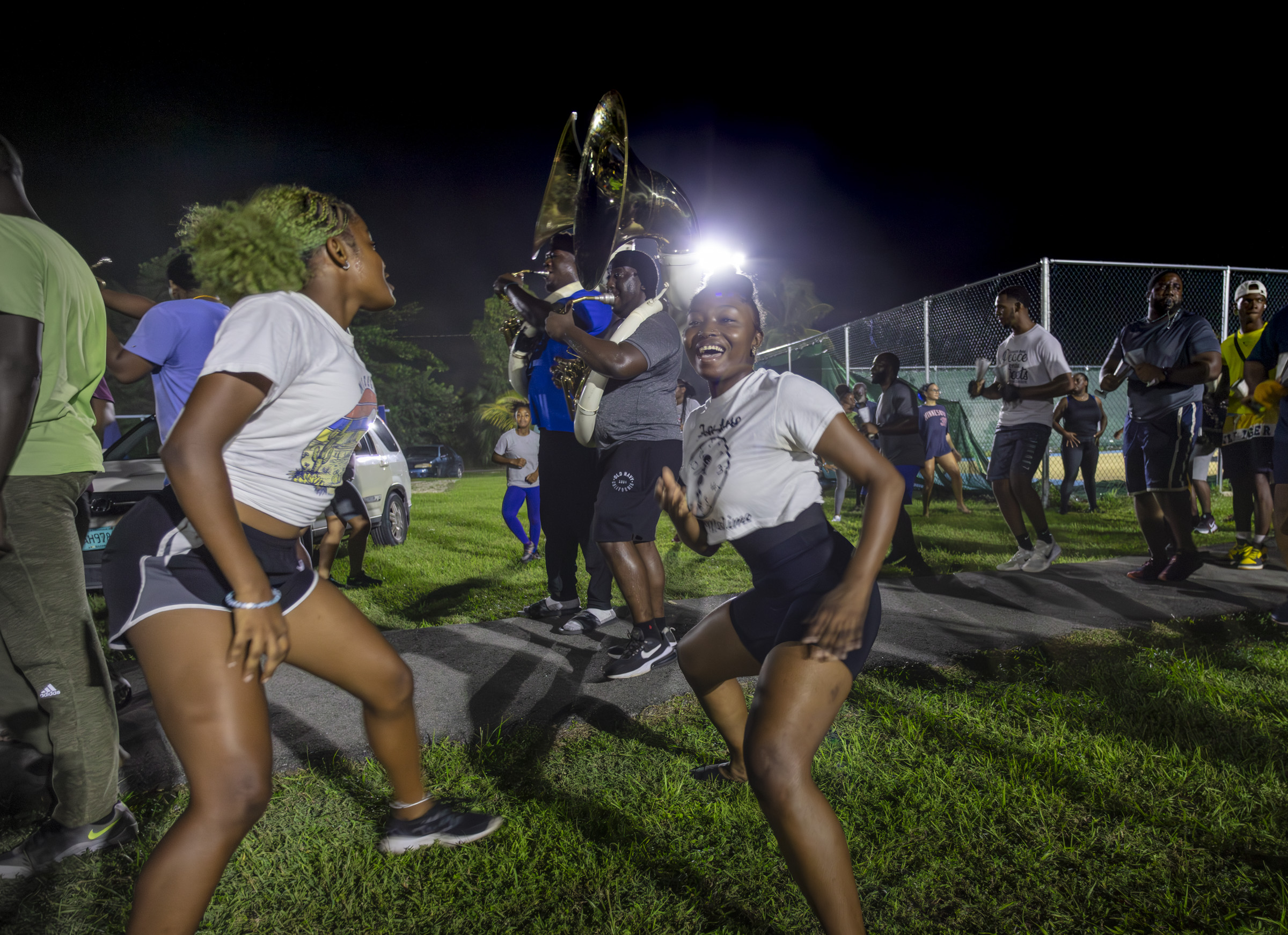
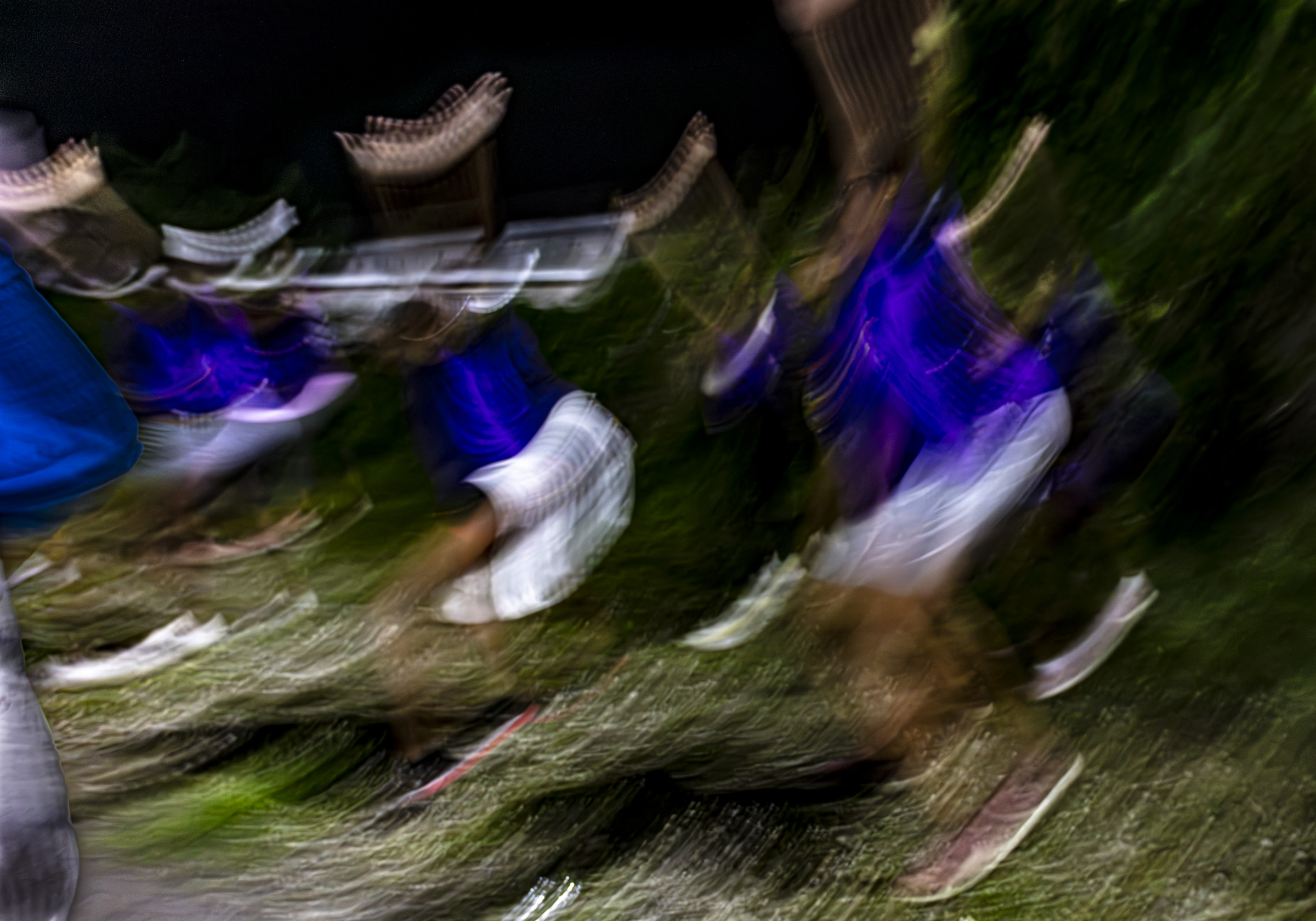
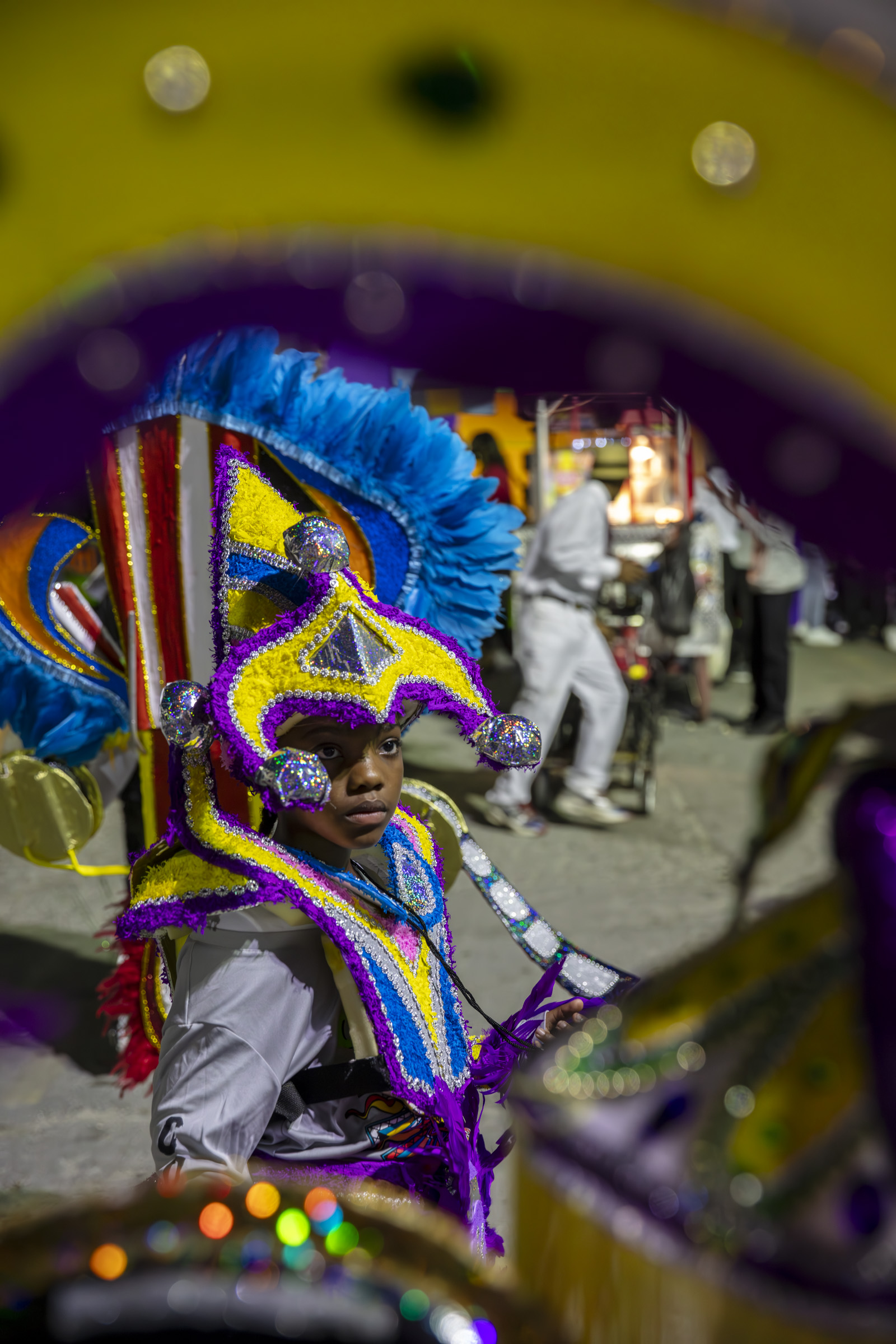


The work we do in the shack is part of what makes Junkanoo Junkanoo. We make our costumes ourselves rather than purchasing them ready-made. Because we're making the costumes ourselves, we are allowed a little leeway in terms of individuality but there's also a certain uniformity in the colours and designs we use. The level of discipline required for a successful parade is seen not only in practice, but in the months spent in the shack.
You can play the best music and have the best choreography every practice, but if the group isn't ready for Bay, you're disqualified. The shack experience is the epitome of comradery. It's a safe space where the infighting just disappears. There is one focus, and that is getting the group out. It's important to maintain the spirit of community so when we spend long hours in the shack, we play Junkanoo music or traditional Christmas music and order food and drinks for everyone working.
Even outside of Junkanoo season, the shack is a space that signifies togetherness. For example, during the summer months, there are mangoes galore, and everyone knows that they can just head to the shack to get their bag. The shack becomes a second home, and once you're there, you're among family. You simply can't win a parade by yourself — everyone is involved. Sometimes people can't or don't make it to the shack to work on their costumes, and so other members step in to help out of sheer love for the craft.
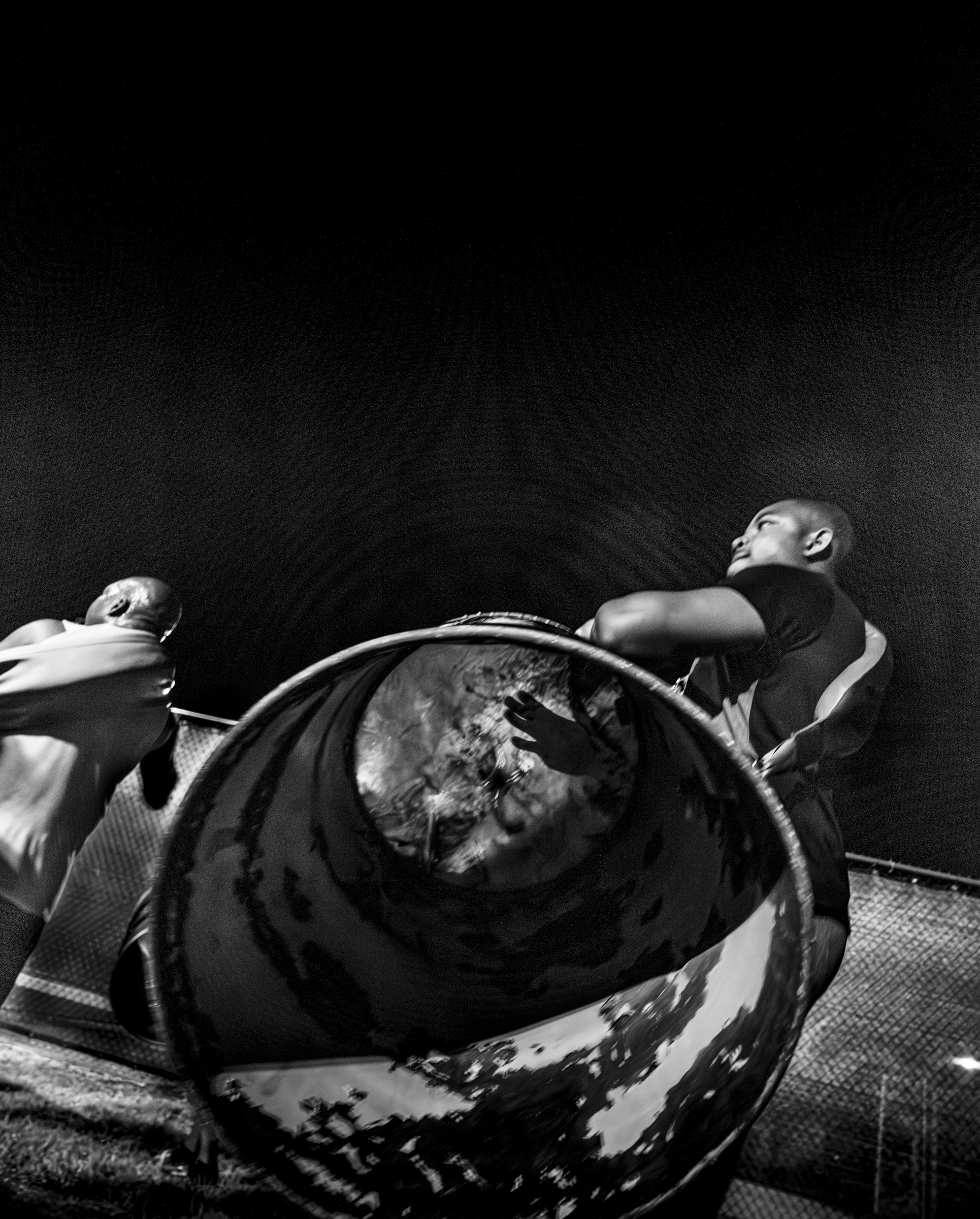
You don't earn your stripes in the shack until you burn your hand with hot glue; it's a christening. Trying to take the molten glue off with the other hand is futile and will only result in you burning two hands. The only thing you can do is fan your hand frantically, maybe blow on it and wait for the glue to cool. This is your initiation.
Shack preparation is essential. While there's no dress code stopping you from 'coming as you are,' the wise among us have a special section of our closet designated to the shack. "Shack clothes" refers to clothes that you don't mind getting stained with white paint or contact cement. Wearing your Sunday best to the shack is a rookie mistake that you'll only make once. The ideal shack attire is long sleeved or long pants and accompanied with "Off" or your chosen mosquito repellant for self-explanatory reasons.
When you walk through a shack, you get a crash course in Junkanoo history. You can find a plethora of old costumes lying around, reflecting the different themes over the years. Once, we held a music workshop for international guests. We also host workshops for new members, teaching them how to paste.

The shack is a multi-purpose space, but in general, it is used for major projects like the construction of the banner, off-the-shoulder costumes and more recently, step down costumes. In the shack we're meant to work on things that we can't do at home like painting, contact cementing, bending and stapling wires into place, drawing designs and more. But those of us who work better with the discipline of not being at home can be found at a special table at the shack with glue, a paint brush, crepe paper and a pair of scissors. There, we fringe and paste our costumes in the company of others. And, closer to the parade when we're "battling," we can be found with a hot glue gun, gems and trim, "tricking our costumes out."
I remember my first time at the shack. I finished a bottle of water and asked where the garbage was. The looks I got made me feel as though I had asked the most outlandish question ever. "We don't throw away nothing in the shack," someone explained. I stood there, captivated, as my water bottle was removed from my hand, cut and filled with Elmer's glue to aid pasting. It's beautiful to watch mundane, often overlooked items transform into something that holds so much value. Earlier in the season, there's cardboard and Styrofoam rods everywhere. Later, the shack is white all around because the costumes have been painted and are ready to be pasted. When you see the metamorphosis of cardboard skeletons into the intricately designed, vibrant costumes we carry on Bay, only then can you understand the pride associated with Junkanoo. You really have to experience it to appreciate it.

I was ten years old the first time I entered a Junkanoo Shack, and I have kept that memory in a glass box, doing my best to preserve every detail. Sometimes, when I am especially homesick or simply reminiscing, I shake that box as if it is a snow globe and see glitter floating in the air behind my eyelids. Here is what I remember most clearly: my beaten up converse sticking to the floor, the same way they did to the one in my school's art classroom; the harsh lights — "to emulate the lights on Bay Street at night," as my mother explained to me; the glitter on every surface, floors and walls and tables alike. But most of all, I remember the devotion. I was shown, as though sacred knowledge, how to paste: how to cut the crepe paper into strips and the little notches into those and how to lay down the glue — not too much so that the crepe paper doesn't get goopy but not so little that it doesn't stick. I remember carefully watching deft, calloused hands lay down layer after layer and thinking that this was the gentlest artist who I'd ever seen work.
The Shack is an edifice of collective care. In the most literal sense, Junkanooers remain continuously concerned with the quality of their craft (be it music, dance or costume building), which will eventually influence the success of their group. This sense of care is furthermore extended to the people with whom the space is shared. The Shack is a place of mentorship, the passing on of generational knowledge and, consequently, of healing. It has long been discussed, in both the spheres of art studies and psychology, that deep engagement with craft has significant therapeutic properties. The repetitiveness of the craft is akin to counting a rosary or repeating a mantra; it has a spiritual element that takes you out of yourself. The creative process satiates the negativity absorbed in daily life and makes us more open and susceptible to building healing connections to ourselves and the people around us.


← drag to explore →


This effect is intensified in a space like the Shack, where every individual plays an essential role in the collective product and must stay in tune with their craft and the crafters around them to maintain balance. Coming together for the specific purpose of creating something together produces a unique focal point for solidarity that brings together Junkanoo's fundamental purpose of celebrating, encouraging and maintaining Black joy. It is also important to consider how the hierarchy of the outside world does not enter the Shack. It does not matter if you are a banker or a plumber or a government official. In the Shack, everyone is simply a Junkanooer. In the face of a system which seeks to divide, alienate and subordinate, the radical history of Junkanoo is kept alive within the space of the Shack by promoting togetherness, intergenerational affinity and equality.
The Shack is a unique aspect of Junkanoo in that it remains virtually immune to being changed by the tourism industry. From the introduction of popular music into performances to mini rush-outs in hotel lobbies, almost every feature of Junkanoo has in some form been twisted to make money and please the tourist except for the Shack. The process of Junkanoo remains untouchable, and the Shack materializes this idea. When the parade ends, Junkanooers get right back to work and begin the cycle again. The spirit of Junkanoo is kept alive year-round. Its presence is constant, even when it isn't visible to the public; Junkanoo is everywhere, all the time, if you are only willing to look. The Shacks are what binds each element of Junkanoo, the glue to the parade's glitter. While Boxing Day and New Year's are the most overt celebrations of liberated spirits, it is within the Shack that the most intimate forms of it are enacted.
At age 14, I experienced a transformative moment during the Christmas Junkanoo festival of 1970, on Bay Street, when "rushing through the crowd" I felt my heart flip into an arrhythmic beat, pounding in my chest and leaving me in a trancelike state. What separated me from the participants was the barricade erected to contain the sea of revelers rushing along the sidewalk in continuous motion. In an instant, I was transported to what seemed like a different dimension, an alternate space. The deep incessant drumbeat melded with the beat of my heart, and for a time, I was carried along by the crowd. Back in 1970, there were no bleachers, no spectator stands, no real separation between the parade and those on the sidelines; the experience was one of complete immersion. In this magical and frightening moment, I felt overcome, my locus of control lost, causing me to surrender to some atavistic force about which I know nothing. When I came to, I was enveloped in the arms of the crowd, safe from peril, my heartbeat restored to its natural rhythm. Since that time, I have been convinced that Junkanoo is a powerfully spiritual phenomenon.
The Junkanoo Festival of The Bahamas is experienced differently by participants and spectators alike — and has, over the years, garnered various responses from commentators, critics, and scholars across The Bahamas and beyond. Commentators such as the late Jackson Burnside III, Percy "Vola" Francis, and Keith Wisdom have foregrounded the importance of Junkanoo as a festival that evinces core cultural values that over time become endemic within Bahamian social and cultural practices. They have variously elucidated ways in which Junkanoo provides a template for teamwork, suggesting that its planning, preparation, process, and performance evince a paradigm for cooperation that bridges political, social, and economic divides. As such, Junkanoo is viewed as a lens through which Bahamian society might fruitfully be analyzed. Scholars have engaged discourse on Junkanoo, asserting its importance as cultural capital, as secular festival, as spiritually infused practice, mapping Afro-Bahamian ancestral history.
In this short paper, I want to continue the exploration of Junkanoo as an indigenous/indigenized epistemology for social organization grounded within a spiritual provenance. At the core of its practice can be seen a decidedly communitarian ethos, which serves as foundational to energizing Afrodiasporic consciousness, and promoting spiritual literacy. Junkanoo's efficacy in placing emphasis on the collective rather than the individual, and thus having the power to galvanize members around community-building to imbue a spirit of togetherness, positions it as a central element in the Bahamian cultural matrix.
The view of Junkanoo as a secular festival emerged in the 1950s with the advent of mass tourism when, as Gail Saunders tells us, the government of the day viewed it as "a powerful tourist attraction." Tourism "changed the form of the parade with government and private sponsorship," incorporating huge groups, elaborate costumes and an expanded inventory of musical instruments. The festival thus underwent "declawing and sanitizing" to make it fit for tourist consumption. Kenneth Bilby observes that "the degree of commodification, the close links with tourism, the cooptation by the state, and the decreasing grassroots control characterizing the contemporary tradition all work against a sense of sacredness," so that the hitherto unconstrained practice of Junkanoo as "ancestral vehicle for deep feelings of a spiritual kind" inevitably gave way to what Pat Rahming refers to as "rationalization, routinization and commercialization." These transformations represent a distinct break with the African spiritual past.
The practiced disavowal of Junkanoo as a deeply spiritual experience promulgated by those in authority sought to circumvent a crucial element of its importance to Afro-Bahamian cultural reality. While some political and religious groups facilely submerged the spiritual quotient of Junkanoo, others like Canon Kirkley Sands assert the inescapable truth that "Junkanoo is a New World slave religious cultural celebration whose antecedents are rooted in West African religious culture." Indeed, Sands contends that it "embodied the slaves' prophetic voice," and "constituted a demand for dialogue with their ancestral faith." He concludes that "Junkanoo is deeply rooted in Bahamian slave spirituality and West African religiosity."
Repositioning and acknowledging Junkanoo's place within African diasporic spiritual traditions as a critical element of the Afro-Caribbean cultural matrix locates it as a radical tool for social mobilization. Moreover, if we reclaim the African spirituality that inheres in the festival, we acknowledge its importance in re-defining the Afro-Caribbean subject in terms that deconstruct the colonial legacies of Anti-African-ness, and acknowledge spiritual intelligence as a bona fide, credible epistemological source.
In her text, I Come to Get Me (2000), Arlene Nash Ferguson explains the profound meaning of the phrase with which she titles her book. Coming to the Junkanoo shack to collect the costume that has been constructed, the participant utters these words, declaring that they have come to inhabit anew the self that is transmogrified through the donning of the costume. Ferguson represents a kind of retrieval of a submerged self that is reenacted in Junkanoo, during which process "we are borne back through the years to understand the drum that beats always within us: the drum that is the spirit of our ancestors … whose voices call out to us across the centuries."
Junkanoo's role as indigenous paradigm for social organization asserts a spiritual ethos that serves a nation still in the process of defining itself. I am convinced of the efficacy of Junkanoo as an epistemology or knowledge tradition that can lead to self-reawakening, reemergence. I am also impelled by the power-potential of this festival in which Spirit energizes the quest for liberty, shapes the psyche, and mobilizes people toward collective freedom. Retro-historically, the practice served to unify the enslaved against spiritual disunity and their common oppressor, the colonizer. Shaped from the African-religious practice, Junkanoo can serve as the catalyst for cohesiveness among the diverse people in The Bahamas, even in the twenty-first century.
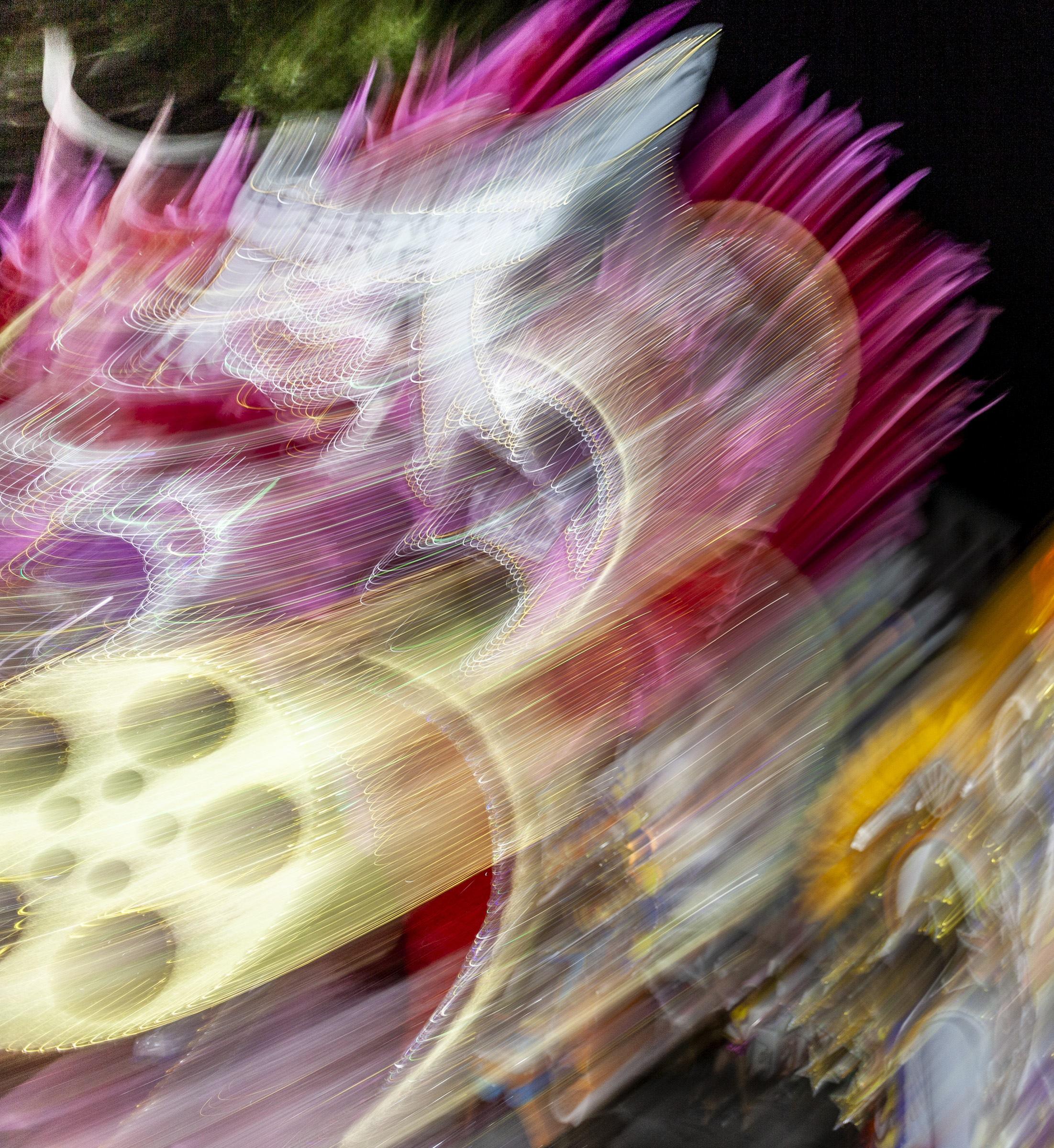
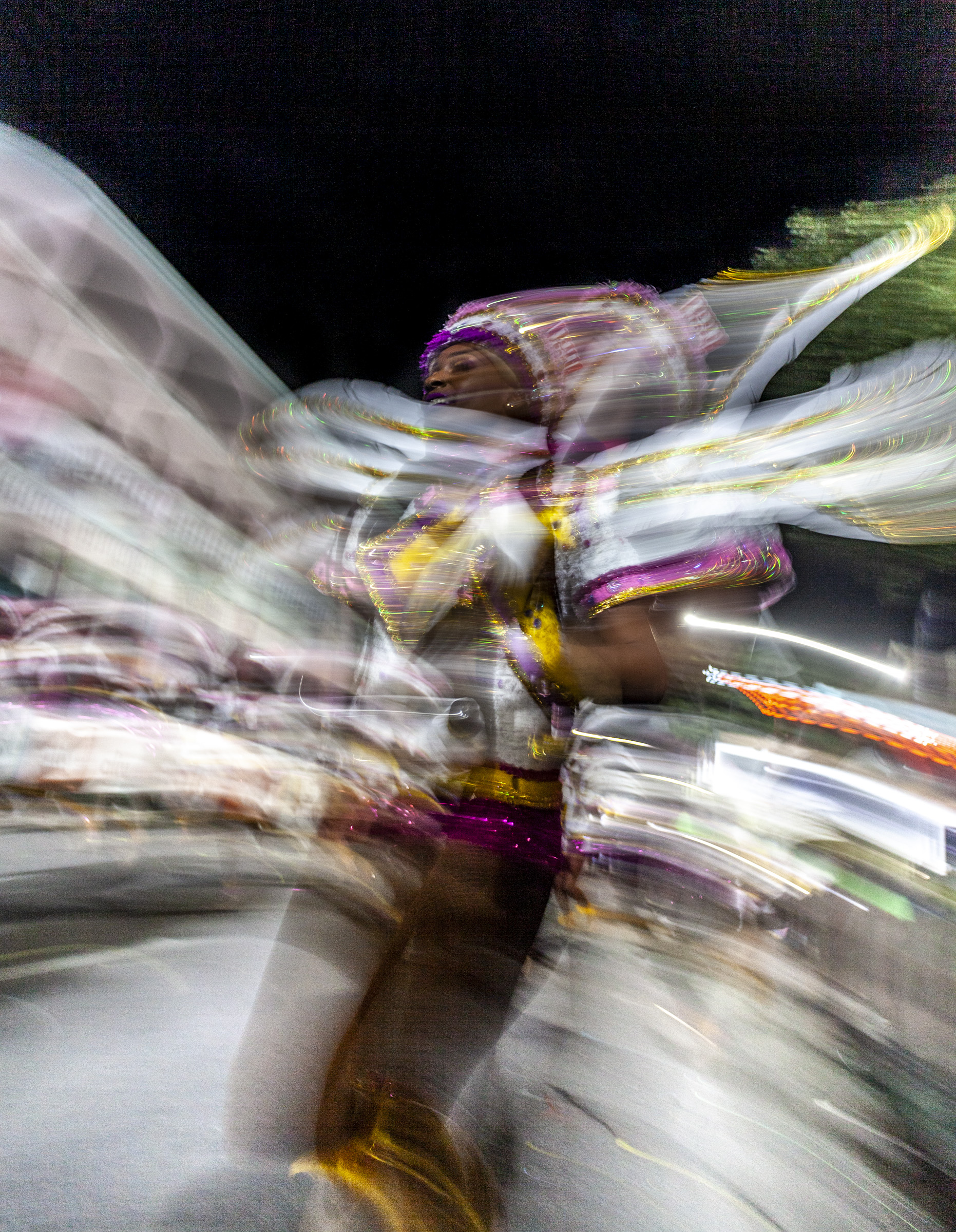
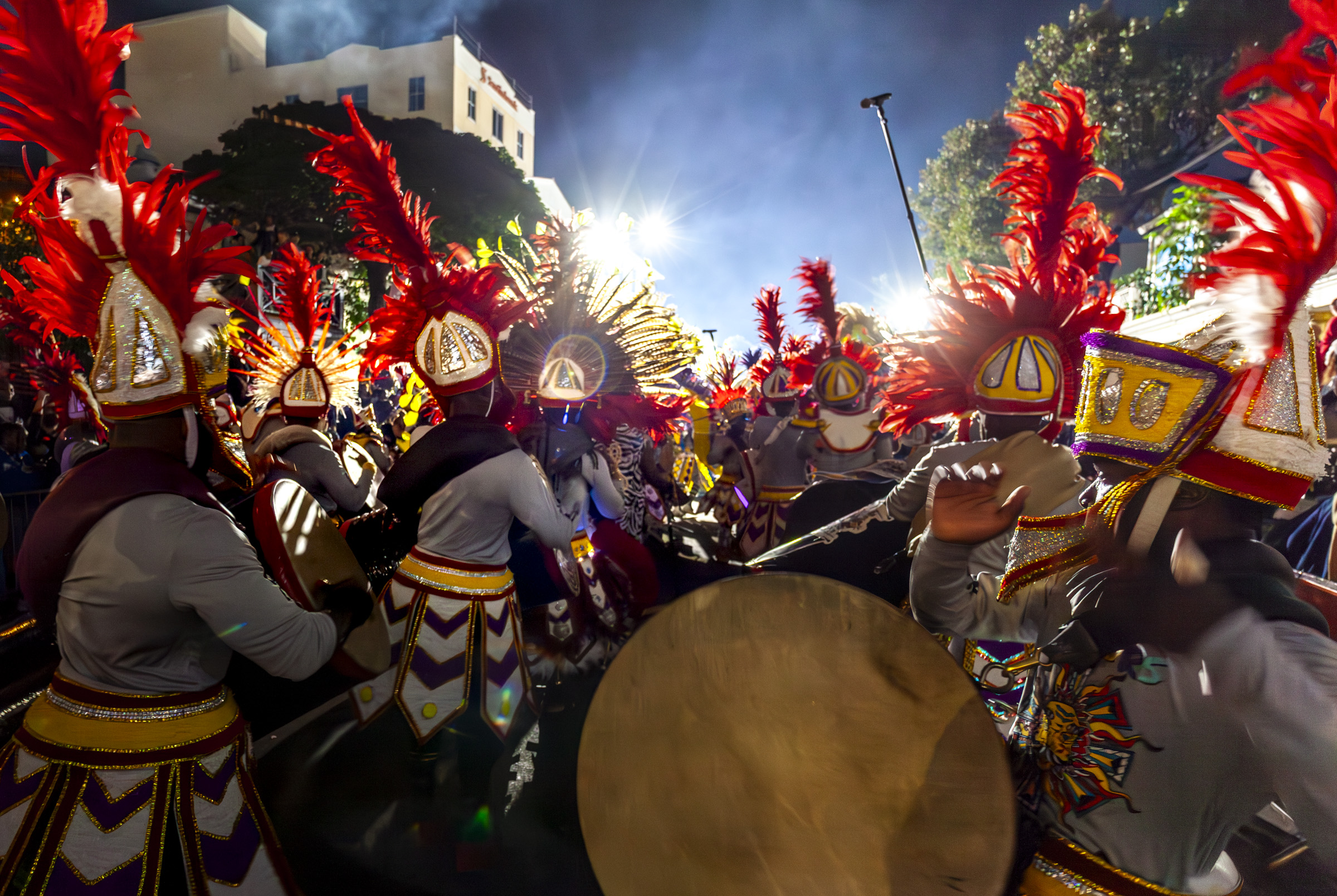

Visiting friends from North America have, most fittingly, referenced our street parade as the Super Bowl of The Bahamas. It is an exhausting but joyful labour of love by the participants for the better part of the year: designers, artists, craftsmen, musicians, dancers and supporters of all kinds. Boxing Day morn sees the first fiercely-fought competition, followed a mere one week later by another, equally colourful and totally different parade that, coincidentally, marks the beginning of a new year. Competitive energy is high as those in each category vie for the ultimate prize and associated bragging rights (and cash prizes) for the skill and artfulness of the performance on which they have worked, but kept secret, all year — judging being based on themes, musical compositions, costume design and choreographed dance moves.
Excited, expectant viewers lose their late night/early morning fatigue as they are treated to colourful costumes and exuberant dance routines that are accompanied by the steady beat of whistles, cowbells, horns, goatskin drums and even conch shells! Excitement galore! Tourists are simply thrilled and in awe of the colour, the beat, the comraderie and share their excitement with Bahamians of all ages who move to the music and jump with joy to root for the group for which they have long-established loyalty! The main groups are very large, comprising from 500 to 1,000 members. I wonder what the most important component must be: numbers of participants, enthusiasm, talent, pride or just sheer celebratory joy?

BUT, if I may be honest, this is written by a white-haired old lady, who looks happily back at memories of a much quieter time from the 1960s. Junkanoo groups were considerably smaller, joyful scrap groups and individual participants more common! Costumes were colourful and creative but on a much smaller scale. Celebrating the New Year at the Junkanoo parade was near and dear to my 'remembrance' of when I was much younger, and like a mountain goat, could happily cavort on an office balcony or shop rooftop on Bay Street. Plentiful drinks, great dinner, dancing and making merry marked the evening as we ended one year and began the new.
Collected by one's (handsome and elegant) partner in formal attire sometime between 9 and 10 p.m., ladies in long gowns and warm shawls or stoles (yes, nights were colder then), we gathered with friends for a late dinner at the Emerald Beach Hotel or Nassau Beach Hotel or the Buena Vista Restaurant or, possibly, the Montague Beach Hotel (you see, I really am dating myself!). Sated with champagne or other alcoholic beverage and good wishes (and hopes) for the New Year, we ventured to Bay Street for the much-anticipated Junkanoo Parade. It was different then — no chain link fencing, not hundreds of police to ensure crowd control, no bleachers mounted high, no ticket sales, no money to be made — back then it was a cultural celebration just for the pure love and joy of our most precious festival.

We gathered on a pre-arranged shop rooftop or office balcony on Bay Street, where liquid refreshments to keep the spirits up were readily available — possibly not too safe, so I won't mention where! High heels off, make-up gone, it was impossible not to move to the rhythm of the night, and some swayed in their partners' arms as the Junkanoo entrants dynamically displayed their talent. Enthusiastic photographers moved among them on the street, memoralising on film the colour and creativity of the occasion. Happy, innocent times! Perhaps the rhythm was somewhat slower, too, as was the pace of life, but I remember that even then we complained about the length of time that we waited between groups. As dawn approached, somewhat disheveled by this time, it was time to find boiled fish or chicken souse, and for some, an icy cold beer! Prizes were awarded by the judges, with or without the unanimous agreement of the public, and another Junkanoo parade was over.
I would like to end this on a personal, happy note, acknowledging that I have had small junkanoo groups "RUSH" at my home for birthdays and weddings. Emerging from the dark back garden to delight the unexpecting guests with their colour, music and dance, they were simply magical! Long may the spirit and colour of Junkanoo reign!
Junkanoo is light in a dark place.
It is hope, when we think we have lost it all.
It's a reminder of what we still have,
when Humanity refuses to show her heart.
Junkanoo is at the foundation of who we "is,"
the struggle that leads to peace.
It exemplifies the spirit of survival.
It is quintessentially, the vibration of celebration.
Junkanoo is the silken cord that unites the enslaved and the enslaver.
It unifies the children of the 'new' world with the descendants of the old.
It is the unforgiving noose that chokes the divide,
the burning spear that pierces the dizzying coolness of a long cold journey.


Junkanoo speaks…
Junkanoo speaks to the heart,
unapologetically engages the soul and renews the spirit.
Junkanoo is the language of love
and the foundation of life to the children of the diaspora.
Junkanoo is the why to the survivor,
the reason for the why to the overcomer
and the reason why the sacrifices of the ancestors,
cannot, will not be forgotten,
by those that love her dearly and defend her fearlessly.
Junkanoo is the umbilical cord
that connects Mother Africa to her unlost, displaced children.
It is the fruit from the tree,
uprooted from the familiar, fertile soil of the fields of home.
Junkanoo is the voice of a choir of millions of unknown souls
lost to time, place and circumstance.
Junkanoo manifests itself in gut wrenching, powerful music
that arrests our senses and feeds our urges.
It wears us down to the bone, stretches our will,
shreds the sinews of our core,
leaves us hungry and begging for more,
but we love her with all that is us and everything that is within us.
Her beauty is inspired by the skilled craftsmanship of the forebearers,
perfected by the genius of their lineage
and is indelibly inked on the smiling faces
that her all encompassing aura commands.
She is revealed in the artistic creations of vibrantly coloured masterpieces,
a treasure trove mined from the junk-piles of the unknowing, the uninitiated.
Junkanoo is our clear and unmistakable path
to a physical place many have never been,
but a spiritual space we know all so well.
Junkanoo is a celebration of the human phenomenon!
It is a journey to home.
Junkanoo is light! Junkanoo is love!
Junkanoo is life! Junkanoo is me!
— Darren E. Bastian · D'Bas Rants© · 5 July 2023
The Portraits
Each member of Colours brings their own story, dedication, and artistry to the shack and to Bay Street.
Oral History
Music Director and founder of Colours Entertainment. Conducted by Douglas Barkey.
On leaving Roots and starting Colours
Colours really was almost an accident. I was rushing in a group called Roots for some ten years. I was always trying to get them to enhance and mix up their music. I probably would be credited for bringing the youngest brass section into Junkanoo — the entire brass section was full of high school kids when I was asked to lead the music of Roots. And the music was totally different back in those days; you wouldn't hear parts like trumpets playing two-part harmony and trombones playing a rhythmic three-part harmony. If you had seven bass players, you had seven different bass lines.
I left Roots because I couldn't do everything I wanted to do with the music. I don't think the group really understood where I was trying to go — to put a world standard on the music of Junkanoo. When I left, I had really given up on Junkanoo. But there were some guys who kept after me the better part of six months. I finally decided: if I do Junkanoo, it has to be this way. We have to have a code of conduct. We have to be an extremely disciplined organization — no alcoholic beverage, no drugs, no profanity. And especially if I'm bringing young kids into it. That was a key factor for me.
On the standard of performance
When it comes to what we take to Bay Street, we are very meticulous about the level of musicianship we present. It has to be at a high standard. People say it's not Junkanoo because it's different. But I could take the criticism — let it not be Junkanoo. The music you hear today from Junkanoo groups stemmed from how I arranged music in the early days. They didn't have parts. It was more like a New Orleans brass band where it was improv. But the difference with New Orleans brass bands is that those guys are trained musicians. When you turn a novice loose, you're going to get a hot mess. I think we've developed a brand — when people hear Colours, they know it's Colours.
On training every member
Colours trains everybody at everything. If someone comes into our organization, they have to learn to paste their own costume, to wire up — the stuff that lives on. A lot of groups don't do that. They pay people from sponsorship money to do certain things, and it doesn't promote the longevity of the Junkanoo craft. I'd rather have a small team that's committed to learning how to do this. When you do the work yourself and you know how much work goes into producing a costume, chances are you'll have a better mental attitude toward your group. You're not just performing — you're actually in the thing you created.
We are the only group in Junkanoo after all these years that has its own property, a functioning building with running water, restrooms, and a kitchen. And the fact that we can do this in a category that does not heavily receive subsidies says a lot.
On rules and discipline
We have a handbook from the very first inception of the group. No swearing. No alcohol at practice or performances. A strict rule about how we interact with the crowd. If someone says something to you, we don't need you to retaliate — when you're dealing with the public, you have no control. If someone throws a stone at you and hits somebody else, you have to take responsibility for the entire organization.
There are consequences for infringement. First time — if it's nothing severe — a verbal warning. Second time, a written warning. Third time, you're expelled. And I don't know of any other group that has these things in place. But I found it necessary. We're not just preparing our members for Junkanoo, we're preparing them for life. Most of our members are doing very well in school or their jobs. The discipline they get here travels with them wherever they go.
On how leadership works in Colours
Colours was never intended to be an elected position. It was supposed to be a group of community leaders that came together and decided: this is what we must do to preserve our culture, to have respectability in the community, and to mold the young people coming to us. People don't get elected to that kind of responsibility. They just are. As long as I want to do this, I'm here. When I'm tired and have no more capacity to make the kind of contribution I want to make — no love lost. When people are free to do what they want to do and they assume that responsibility, they work better at it.
On Colours as a world-class group
Colours is not an A or B group. We are a world-class group. We are raising a standard. Pound for pound, the category-eight groups have more experienced musicians than we do — most of ours are beginners or intermediate students. But what we are able to get out of them, because of the teaching and discipline we have, far outweighs having a bunch of professionals doing their own thing. It's just like any basketball team. You can have the best ball players in the world and they can't win because they're not working together. When you can train people to do things cohesively, it pays off big time.
On Bahamian themes and music
We have, with one exception, always done Bahamian themes. When you go to a Jamaican festival, it features reggae. In The Bahamas, we are already at a disadvantage with people not knowing our music. So why not use this opportunity to reintroduce the old music? We did a theme on carnival — not Trinidad Carnival, but the carnival that comes here every year with all the rides. When they hear the theme, they're thinking Trinidad. Then we come on Bay Street playing Bahamian music, featuring the carnival rides, the popcorn, the cotton candy — things they can relate to. That is where we've become innovative. And I think we've been influencing a lot of the A groups in how they're approaching their themes.
Member Voice
Brass player, Colours "Full Throttle" section. Interviewed by Krystin Cartwright.
On his first rush
In the black and white picture, it was my first time rushing in the Junkanoo parade — that was actually the first practice I went to, so it was all new to me. But in the coloured picture, on Boxing Day night, when they tell you mount up and the drums roll over and the bells kick in, it just filled me with adrenaline, excitement, elation. It felt like it was something I was meant to do.
How he joined Colours
At the start I was never interested in Junkanoo, but I'm a member of The Bahamas All-Stars Marching Band. Last year they had a ceremony honouring all of the famous athletes from The Bahamas — my band was scheduled to do a parade there, and afterwards we were going to perform a joint rush-out with Colours Junkanoo group. After that rush, he asked me if I enjoyed it and if I would be interested in rushing again. I said yes, and then I became a member of Colours brass group — "Full Throttle" is what we call ourselves.
Four trombone players including myself, two sousaphone players and one or two trumpet players also joined. Four more trumpet players joined recently, another sousaphone player, along with some drummers from the drum line.
On time at the shack
Right now, we're in the shack every day of the week. People come out when they can because of work and school, but when December hits people are in the shack every day, all day. That's usually when all the college students come home so they can start pasting their costumes. Usually on Sundays we have practice, and the shack is full then. I try to make it when I can.
On what Colours means
Colours prides itself on not just being a Junkanoo group playing music and beating drums, but putting on a show and displaying what Junkanoo is to the world. That's why our full name is Colours Junkanoo and Entertainment. Our leader has a little saying: "We're not A class, we're not even B class, but we're world class."
The group provides all of the cardboard, paint, staples, and paper. The only things you need are a pair of scissors and a brush. The only thing we really pay for ourselves is decoration to bring out the life in our costumes. The really expensive part is the feathers, which can go for $12 all the way to $50. I spent almost $100 on feathers one time. I was hurt.
On the atmosphere of the shack
They try to foster a good environment for children to be raised in the Junkanoo world, where they can learn manners and respect at the same time. We have kids all the way down to the age of four, to the old heads who've been there for years. We're all really a family.
Every page in this book is a play on the meaning of the word "colour" and the colours of Junkanoo. Colour is more than pigmentation; it is also the nuance of personality, the style of sound, the smells of street food — the character of the celebration. The primary subject matter of these images is the Colours' Junkanoo shack as the case study to visually explore the many facets of shack life and ultimately the performance on Bay Street. The Colours' shack represents what goes on in all the shacks as they prepare for the major annual rush. I hope the reader goes away with a better understanding of the people who make Junkanoo happen and the creative work that goes into the preparation. Even more, I hope readers learn what I have learned in making this book, that the roots of Junkanoo run deep to origin of culture and identity and are a manifestation of vibrant human creativity, resilience and community.
I've photographed many festivals, parades, carnivals and processions over my career, but Junkanoo struck me as being quite unique the first time I photographed it because it brought fine arts, craft, music, design, dance and drama all together right at the street level. The more I learned about how Junkanoo happens, the more I became interested in exploring it visually as a sociocultural activity that arises out of Bahamian communities. These photographs are the result of embedding with the Colours' shack, going to their practices and hanging around the shack while they designed their theme, crafted their costumes and built their float. The fact is that a lot goes on in the shack all year that has as much to do with mentorship, developing character, friendship and community as it does with the actual final performance. This for me is the "colour" of Junkanoo that pervades all aspects of it — the human creative element that comes out of using imagination to invent magnificent costumes out of nothing more than cardboard, wire, pasted paper and rubber cement.
As several of the writers have discussed, the Junkanoo of today has grown out of a long and complex tradition with political, social, economic and cultural implications evolving from the places of origin of people who were enslaved and brought to these islands against their will. It has been, and is, an act of resistance — the recalling of the past combined with a celebration of the moment. I photograph what manifests today with the understanding that my perspective is just a mark on the timeline. But I think that mark is representative — it reflects on the tradition that lives on today as the Junkanoo shacks gear up for another rush. My hope was to convey, most of all, the beauty and joy of Junkanoo — the energy and brilliance of dancing down Bay Street to the roar of the crowds and thunderous beat of the drums.


The Book
Inside the Shack
A private, limited edition publication featuring photographs documenting the people, preparation, and performance of Colours Entertainment — one of the most celebrated Junkanoo groups in The Bahamas.
Through immersive, intimate photography, Douglas Barkey brings the shack to life: the months of costume-making, the communal bonds forged through long nights with glue guns and crepe paper, and the exhilarating rush down Bay Street on Boxing Day morning.
With essays by leading scholars and Junkanoo insiders, this volume stands as a definitive exploration of Junkanoo culture, history, and spirit.
Copyright © 2024 · ISBN: 978-9768205-66-7 · Limited Edition
The Team
Gratitude
This book would not have been possible without the generosity of Colours. They let me into their communal space, collaborated to make portraits and patiently explained their craft and community. In some ways, I ended up making this book for them. Their leader, Chris Justilien, is an extraordinarily talented musician who shared much insight about how Junkanoo works. I am grateful to the writers who added an important layer of relevance and meaning by sharing their experiences and understanding of Junkanoo. The work of Dr. Nicolette Bethel and her father, E. Clement Bethel, precede this work and she was instrumental in the early shaping of the direction of the book, not to mention the participation of her UB students from her course (Junkanoo: History, Politics and Performance) in interviewing Colours members. A warm thank you to the various individuals who took the time to review and comment on early drafts and images, including Ulrich Voges, Dawn Davies, Antonius Roberts, Marjorie Brooks-Jones and, in particular, Arlene Nash Ferguson who penned the Foreword. The support and encouragement I received from Dr. Maria Woodside-Oriakhi from the University of The Bahamas in sponsoring part of the costs of producing the book was fundamental to getting it printed. Thank you to Dr. Christine Kozikowski for helping the writers polish their work and organizing all the text. Finally, Dr. Ingrid Bircann-Barkey, who I have the good fortune to be married to, helped keep me focused on the central theme and pare the images down to the best in content and relevance.
— Douglas Barkey
References
Your cart is empty.